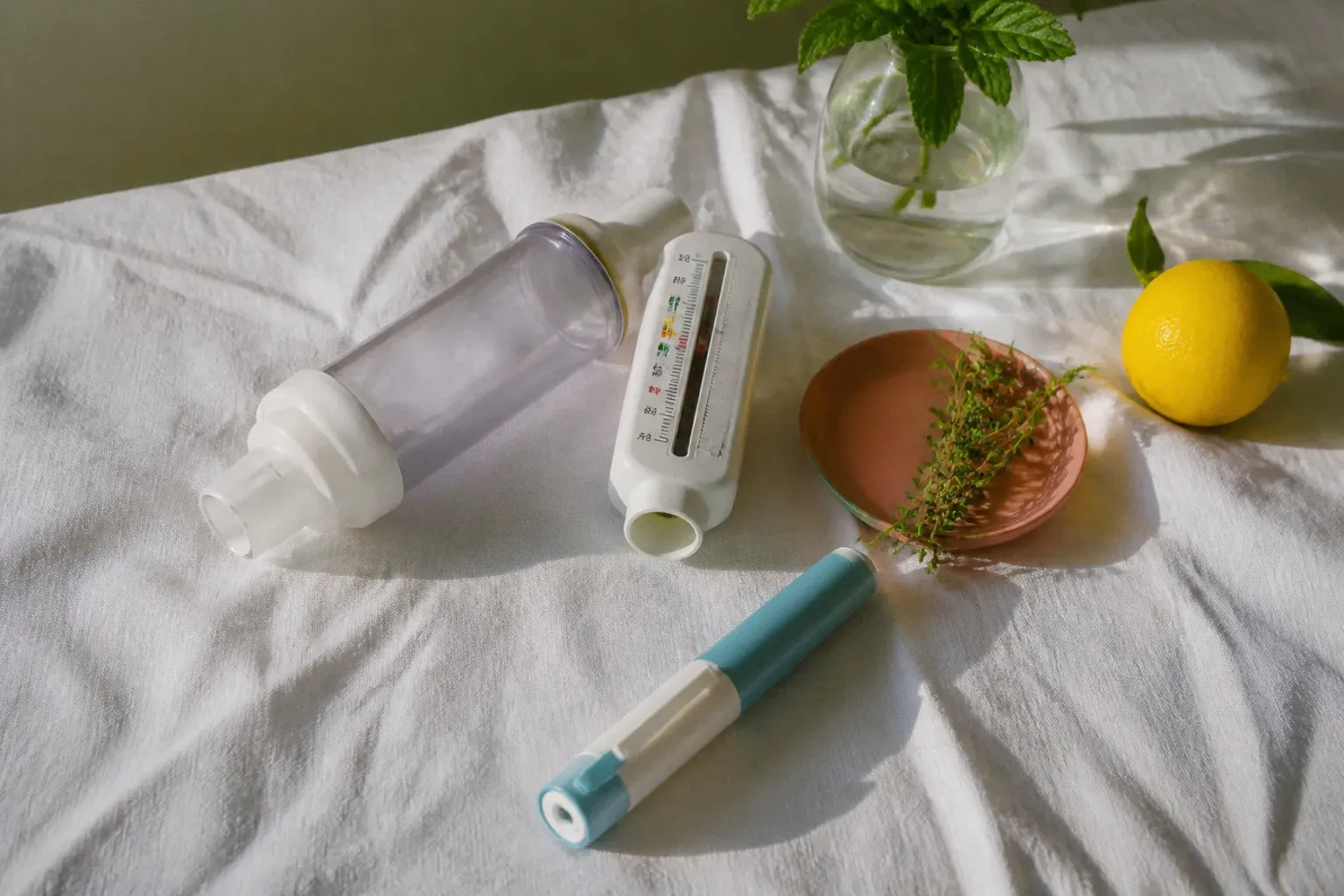
Do GLP-1 medicines help COPD? In people who have both COPD and type 2 diabetes, starting a GLP-1 medicine has been linked to fewer flare-ups in several large cohort studies, and one small trial found liraglutide improved some lung measures in people with obesity and COPD. None of these drugs is approved for COPD, and no randomized trial has yet made flare-ups its main outcome.
Chronic obstructive pulmonary disease, or COPD, narrows the airways and damages the air sacs, and tobacco smoke is the usual cause. People with COPD can have frequent flare-ups, called exacerbations, which may mean a course of steroids and antibiotics or a hospital stay. Type 2 diabetes and obesity are common alongside COPD, which is why lung researchers started looking at what diabetes drugs do to breathing.
This article covers the one randomized trial, the cohort studies on GLP-1 medicines and COPD exacerbations, how GLP-1 drugs compare with SGLT-2 inhibitors and metformin, why weight loss in COPD is not straightforward, and what nobody has tested yet.
Key Takeaways
- In a randomized trial of 40 people with obesity and COPD, liraglutide 3.0 mg raised forced vital capacity by 0.33 L more than placebo at 40 weeks, but FEV1 did not change significantly (Altintas Dogan, 2022).
- In UK patients with COPD and type 2 diabetes, GLP-1 medicines were linked to a 30% lower risk of severe exacerbation than sulfonylureas, 3.5 versus 5.0 hospital admissions per 100 person-years (Pradhan, BMJ, 2022).
- A 2025 systematic review of six observational studies and 62,678 patients found fewer asthma or COPD exacerbations on GLP-1 medicines than on sulfonylureas (rate ratio 0.52) or DPP-4 inhibitors (0.63).
- GLP-1 medicines and SGLT-2 inhibitors performed about the same in head-to-head cohort comparisons, and a Japanese study found no advantage over metformin (hazard ratio 1.07).
- No GLP-1 medicine is approved for COPD, and no study has tested a low or microdose regimen in people with lung disease.
Can a GLP-1 medicine improve lung function in COPD?
Altintas Dogan and colleagues, Int J Chron Obstruct Pulmon Dis, 2022
A GLP-1 medicine improved some lung measures in the only randomized trial so far, but not the main measure of airflow obstruction. Danish researchers randomized 40 people with obesity and COPD to daily liraglutide 3.0 mg or placebo for 40 weeks, then followed them for 4 more weeks off treatment. Participants had a mean age of 64.7, and mean BMI was 35.1 in the liraglutide group and 36.6 on placebo.
At week 40, the liraglutide group weighed 8.4 kg less than the placebo group after adjusting for starting weight. Forced vital capacity (FVC), the total air a person can blow out, rose by 0.33 L more than on placebo, and FVC as a percent of predicted rose 7.69%. Diffusion capacity, a measure of how well oxygen crosses into the blood, also improved. The COPD Assessment Test score, where lower is better, fell 3.94 points more than on placebo.
FEV1, the volume blown out in the first second and the number doctors use to grade COPD, did not change significantly. Neither did the FEV1/FVC ratio or the 6-minute walk distance, where a 27.9 m difference did not reach significance. Three people on liraglutide stopped because of gastrointestinal side effects, and 16 liraglutide and 14 placebo participants completed the study.
Weight Change on Liraglutide Versus Placebo
Baseline-adjusted difference in body weight, kg. Treatment stopped after week 40.
Altintas Dogan AD et al. Int J Chron Obstruct Pulmon Dis, 2022, Table 2. 40 people randomized, liraglutide 3.0 mg daily.
Forced Vital Capacity Gain on Liraglutide
Baseline-adjusted difference versus placebo, litres. The gain faded once treatment stopped.
Altintas Dogan AD et al. 2022. Significant at week 40 only; FEV1 did not differ significantly at any visit.
What happened to lung function after liraglutide stopped?
The week 44 follow-up visit
The FVC gain largely disappeared within 4 weeks of stopping, even though most of the weight loss remained. At week 44, the liraglutide group still weighed 7.1 kg less than the placebo group, yet the FVC difference had dropped to 0.04 L and was no longer significant.
That pattern is worth noticing. If extra lung volume came purely from carrying less weight on the chest and abdomen, it should have held up while the weight stayed off. A quick fade hints that the drug itself may have been doing part of the work, although a 40-person trial cannot settle that. A secondary analysis of the same trial found that 84% of participants had obstructive sleep apnea, and liraglutide lowered the apnea-hypopnea index by 9.87 events per hour against placebo. Our article on GLP-1 medicines and sleep apnea covers that overlap in more detail.
Do GLP-1 medicines reduce COPD exacerbations?
Pradhan and colleagues, BMJ, 2022
Large cohort studies link GLP-1 medicines to fewer COPD exacerbations in people with type 2 diabetes. The most cited is a McGill University analysis of UK primary care records published in the BMJ. It compared 1252 people with COPD who started a GLP-1 medicine against 14,259 who started a sulfonylurea, an older diabetes drug with no expected lung effect.
GLP-1 users had 3.5 hospital admissions for COPD per 100 person-years against 5.0 on sulfonylureas, a 30% lower risk (hazard ratio 0.70). Moderate exacerbations, treated with steroids and antibiotics outside hospital, were also less common (hazard ratio 0.63). SGLT-2 inhibitors showed a similar drop in severe exacerbations, while DPP-4 inhibitors, another diabetes class, showed a smaller change that could have been chance.
The confidence interval for the GLP-1 result ran from 0.49 to 0.99, which only just excludes no effect. That is typical of this field: the direction is consistent across studies, but each individual estimate is less precise than the headline number suggests.
Severe COPD Exacerbations by Diabetes Drug
Hospital admissions for COPD per 100 person-years, each drug class against its own sulfonylurea comparison group
- Study drug
- Sulfonylurea
Pradhan R et al. BMJ, 2022. UK Clinical Practice Research Datalink; three separate new-user cohorts with COPD and type 2 diabetes.
Do the US studies show the same pattern?
Foer, AJRCCM, 2023; Ray, JAMA Internal Medicine, 2025
Yes, the US studies point the same way, with a smaller effect in the largest one. A Mass General Brigham study of 1,642 patients with COPD found adjusted exacerbation rates were 1.48 times higher on DPP-4 inhibitors and 2.09 times higher on sulfonylureas than on GLP-1 medicines. It found no significant difference between GLP-1 medicines and SGLT-2 inhibitors.
The 2025 JAMA Internal Medicine study used three US insurance databases, including Medicare, to emulate head-to-head trials in adults aged 40 or older with diabetes and active COPD, averaging about 70 years old. Across 32,107 matched pairs, moderate or severe exacerbations occurred at 9.89 per 100 person-years on GLP-1 medicines against 11.49 on DPP-4 inhibitors (hazard ratio 0.86). The comparison with SGLT-2 inhibitors was close to even: 9.47 against 10.00 per 100 person-years, hazard ratio 0.94. Median time on treatment was only 145 days, so these are short-term findings.
Exacerbation Rates in US Claims Data
Moderate or severe COPD exacerbations per 100 person-years in propensity-matched pairs
- First drug named
- Second drug named
Ray A et al. JAMA Internal Medicine, 2025. Optum, MarketScan and Medicare claims; adults with type 2 diabetes and active COPD.
Is the evidence for fewer COPD flare-ups consistent?
Five cohorts, three continents
The evidence leans towards benefit but depends heavily on the comparison drug. A 2026 UK primary care study matched 4479 patients with COPD and diabetes and found GLP-1 starters had fewer exacerbations over 12 months than similar patients not on a GLP-1 medicine (rate ratio 0.84), and fewer oral steroid prescriptions (0.86). A TriNetX health records study of tirzepatide in 12,110 matched adults with COPD reported a hazard ratio of 0.77 for exacerbations and 0.71 for pneumonia.
The exception is metformin. A Japanese national database study of 36,317 patients compared each newer diabetes drug with metformin and found GLP-1 medicines offered no exacerbation advantage (hazard ratio 1.07, confidence interval 0.87 to 1.32). Metformin is often the first drug a person with diabetes takes, and it has anti-inflammatory effects of its own, so a GLP-1 medicine looks better against a sulfonylurea than against metformin. Our article on metformin and GLP-1 medicines together covers how the two are used side by side.
A Taiwanese national study in Thorax went further, matching 8060 GLP-1 users with non-users and reporting lower risk of death (hazard ratio 0.46), invasive mechanical ventilation (0.64) and bacterial pneumonia (0.76) over about 2.5 years. A drop in deaths that large is a warning sign as much as a finding, because it suggests the people who got the drug may have been healthier to begin with.
COPD Exacerbation Risk on a GLP-1 Medicine, by Comparison
Hazard or rate ratio from each cohort. Below 1 means fewer exacerbations on the GLP-1 medicine.
Pradhan, BMJ, 2022 (severe); Ray, JAMA Intern Med, 2025; Alcázar-Navarrete, Pragmat Obs Res, 2026; Wu, Front Pharmacol, 2026; Kimura, ERJ Open Res, 2025. All observational.
What does the systematic review conclude?
Cooper and colleagues, Respiratory Medicine, 2025
A University of Ottawa systematic review found GLP-1 medicines were associated with fewer asthma or COPD exacerbations than sulfonylureas or DPP-4 inhibitors, but not SGLT-2 inhibitors. The review pooled six retrospective studies with 62,678 adults who had diabetes and obstructive lung disease. The pooled rate ratio was 0.52 against sulfonylureas and 0.63 against DPP-4 inhibitors, while the 0.66 against SGLT-2 inhibitors had a confidence interval too wide to mean much.
Two comparisons rested on a single study each: GLP-1 medicines did better than insulin (0.39) and worse than metformin (1.24). The authors said their findings now need confirming in prospective trials, and the teams behind the US health system study and the tirzepatide study wrote much the same. People with diabetes who also take an SGLT-2 inhibitor can read our article on combining SGLT-2 inhibitors and GLP-1 medicines.
Pooled Exacerbation Rate Ratios for GLP-1 Medicines
Asthma or COPD exacerbations on a GLP-1 medicine versus each comparator. Below 1 favours the GLP-1 medicine.
Cooper DH et al. Respiratory Medicine, 2025. Six retrospective studies, 62,678 adults. *Single study only.
Why might GLP-1 medicines affect the lungs?
Weight, inflammation and the receptor in lung tissue
Weight loss is the simplest explanation. Fat around the abdomen and chest wall limits how far the lungs can expand, so losing it can raise the total volume a person can breathe out, which is what FVC measures. That fits the liraglutide result, where FVC rose but FEV1, which reflects the narrowed airways themselves, did not.
Researchers also point to effects beyond weight. GLP-1 receptors are present in lung tissue, and the Danish trial team noted earlier work showing liraglutide lowers inflammatory markers such as IL-6. In their own trial, though, blood CRP, IL-6 and MCP-1 did not differ significantly from placebo. Blood sugar may also matter, since people with both COPD and type 2 diabetes have worse outcomes than those without the metabolic problems.
Is weight loss always a good thing in COPD?
The COPD obesity paradox
No. In advanced COPD a low BMI predicts a worse outlook, and overweight and mild obesity are linked to better survival, a pattern known as the COPD obesity paradox. The Danish trial authors argued this probably reflects how sick and how heavy a smoker someone is rather than any protective effect of extra weight, but it means weight loss in COPD needs care.
Muscle matters here. Appetite-suppressing drugs can make it harder to eat enough protein, and losing muscle along with fat would work against the point of losing weight. The cohort evidence comes from people with diabetes, most of them carrying excess weight; it says nothing about thin or frail patients. Our guide to exercise and muscle preservation on a GLP-1 covers the strategies studied so far.
Has a GLP-1 microdose been tested in COPD?
What the evidence can and cannot support
No. The only randomized trial used liraglutide at 3.0 mg, the full weight-loss dose, and the cohort studies captured whatever doses doctors prescribed for diabetes. None reported lung outcomes by dose. Whether a low maintenance dose changes lung function or flare-ups is unknown.
Gastrointestinal side effects are worth weighing in COPD too. Three of the 20 people given liraglutide in the Danish trial stopped because of them, and vomiting or poor appetite can be harder to manage for someone already short of breath. Anyone with COPD who is considering a GLP-1 medicine should involve their respiratory team, keep using their inhalers as prescribed and treat any lung benefit as a possibility rather than a reason to change COPD treatment.
Frequently Asked Questions
References
- Altintas Dogan AD, Hilberg O, Hess S, et al. Respiratory Effects of Treatment with a Glucagon-Like Peptide-1 Receptor Agonist in Patients Suffering from Obesity and Chronic Obstructive Pulmonary Disease. International Journal of Chronic Obstructive Pulmonary Disease, 2022. doi:10.2147/COPD.S350133
- Wolsing SK, Dogan ADA, Juhl CB, et al. Exploratory Analysis of Liraglutide Effects on Obstructive Sleep Apnea and Health-Related Quality of Life in Individuals With Obesity and COPD: A Secondary Analysis of a Randomised Controlled Trial. Clinical Obesity, 2026. doi:10.1111/cob.70079
- Pradhan R, Lu S, Yin H, et al. Novel antihyperglycaemic drugs and prevention of chronic obstructive pulmonary disease exacerbations among patients with type 2 diabetes: population based cohort study. BMJ, 2022. doi:10.1136/bmj-2022-071380
- Foer D, Strasser ZH, Cui J, et al. Association of GLP-1 Receptor Agonists with Chronic Obstructive Pulmonary Disease Exacerbations among Patients with Type 2 Diabetes. American Journal of Respiratory and Critical Care Medicine, 2023. doi:10.1164/rccm.202303-0491OC
- Ray A, Paik JM, Wexler DJ, et al. Glucose-Lowering Medications and Risk of Chronic Obstructive Pulmonary Disease Exacerbations in Patients With Type 2 Diabetes. JAMA Internal Medicine, 2025. doi:10.1001/jamainternmed.2024.7811
- Cooper DH, Akbarian N, Aaron SD, et al. Glucagon-like peptide 1 (GLP-1) receptor agonists and asthma and COPD exacerbations in adults with diabetes: A systematic review. Respiratory Medicine, 2025. doi:10.1016/j.rmed.2025.108197
- Yen FS, Hsu CC, Wei JC, et al. Glucagon-like peptide-1 receptor agonists may benefit cardiopulmonary outcomes in patients with COPD. Thorax, 2024. doi:10.1136/thorax-2023-221040
- Wu JY, Lin YM, Hsu WH, et al. Clinical impact of tirzepatide on patients with chronic obstructive pulmonary disease. Frontiers in Pharmacology, 2026. doi:10.3389/fphar.2026.1838392
- Alcázar-Navarrete B, Heatley H, Kaplan A, et al. The Potential Impact of GLP-1 Receptor Agonists on Exacerbation Risk in Patients with COPD and Type 2 Diabetes: A Real-World Population-Based Observational Study. Pragmatic and Observational Research, 2026. doi:10.2147/POR.S550543
- Kimura Y, Jo T, Inoue N, et al. Association of novel antihyperglycaemic drugs versus metformin with COPD exacerbations. ERJ Open Research, 2025. doi:10.1183/23120541.00757-2024
This article is for general educational purposes only and does not constitute medical advice or a recommendation to start, stop or change any medication. Liraglutide, semaglutide, tirzepatide and other GLP-1 receptor agonists are prescription medicines, none is approved to treat chronic obstructive pulmonary disease, and microdose regimens are not an FDA-approved way of using GLP-1 drugs. COPD should be diagnosed and managed by a qualified clinician, and inhaled treatments should not be stopped or changed without medical advice. Seek urgent care for severe breathlessness, blue lips or chest pain. Nothing here is intended to diagnose, prevent, treat, or cure any condition.
Smaller Doses. Sharper Protocols.
Metabolic health you can measure, built around a dose designed to work with your body rather than against it.
Find Your Protocol